Pilot & Aeronautical Engineer
Pilot

Pilot
Cover Letter (9 pages)
The cover letter comprises the following segments: meeting the criteria for an Advance Degree, Prong 1, Prong 2, Prong 3, and an appendix containing all supporting evidence. When checking out, you have the option to select up to two professions.
Pilot
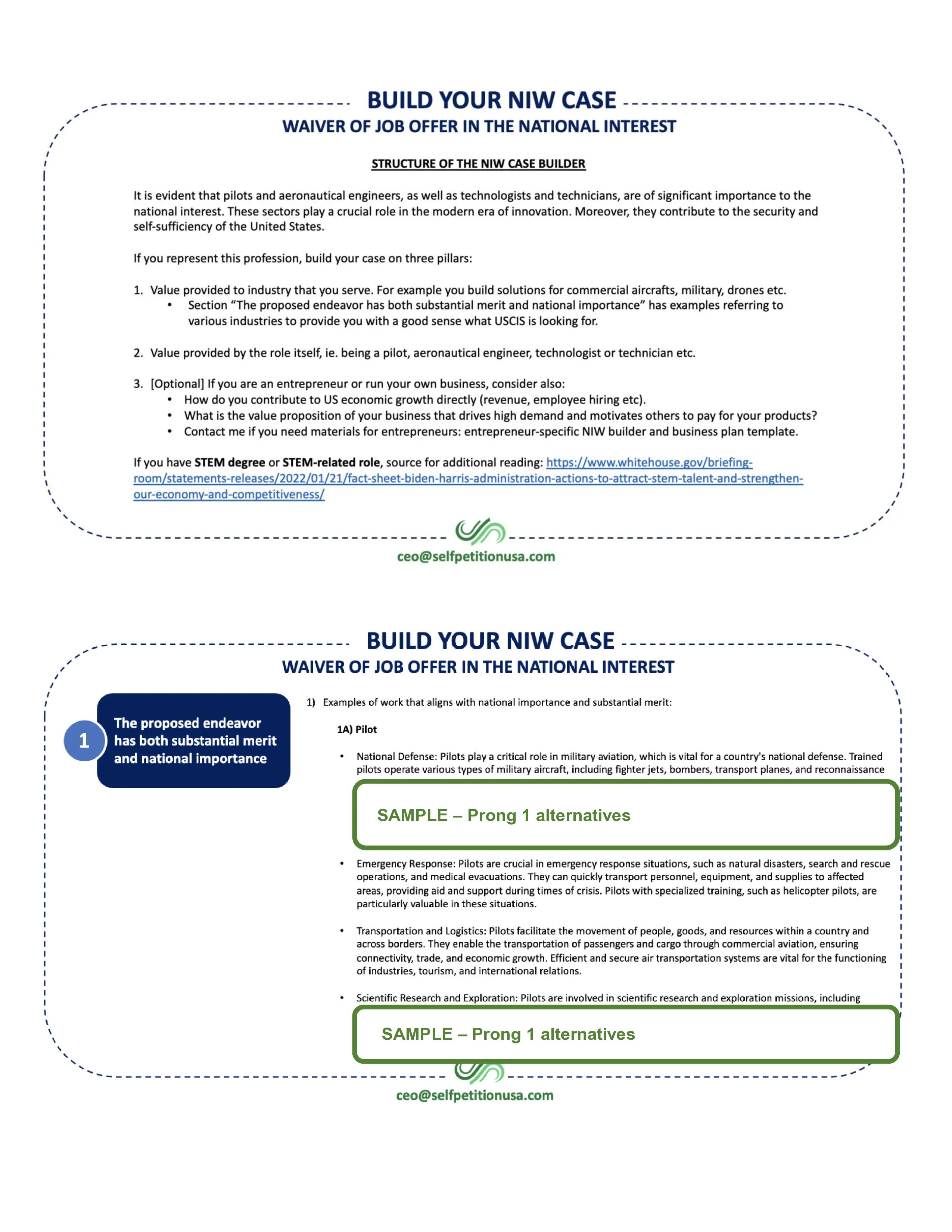
EB-2 NIW Case Builder (20 pages)
You might be wondering how to identify relevant NIW initiatives and supporting arguments. This is where the NIW Case Builder Pdf comes in – it's designed to inspire you with alternative points to emphasize in your cover letter as you modify our template.

Pilot & Aeronautical Engineer
Cover Letter (9 pages)
The cover letter comprises the following segments: meeting the criteria for an Advance Degree, Prong 1, Prong 2, Prong 3, and an appendix containing all supporting evidence. When checking out, you have the option to select up to two professions.
Pilot & Aeronautical Engineer
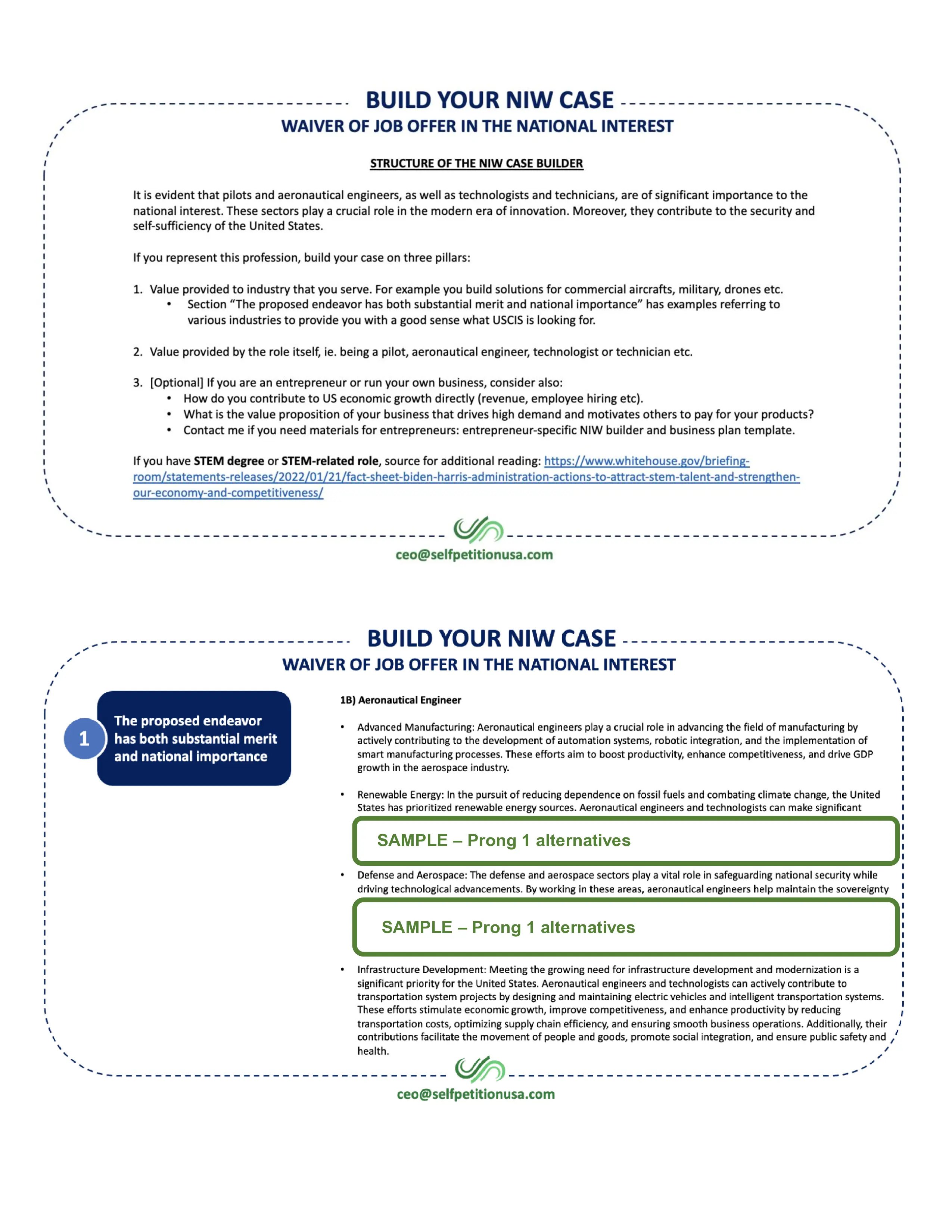
EB-2 NIW Case Builder (20 pages)
You might be wondering how to identify relevant NIW initiatives and supporting arguments. This is where the NIW Case Builder Pdf comes in – it's designed to inspire you with alternative points to emphasize in your cover letter as you modify our template.
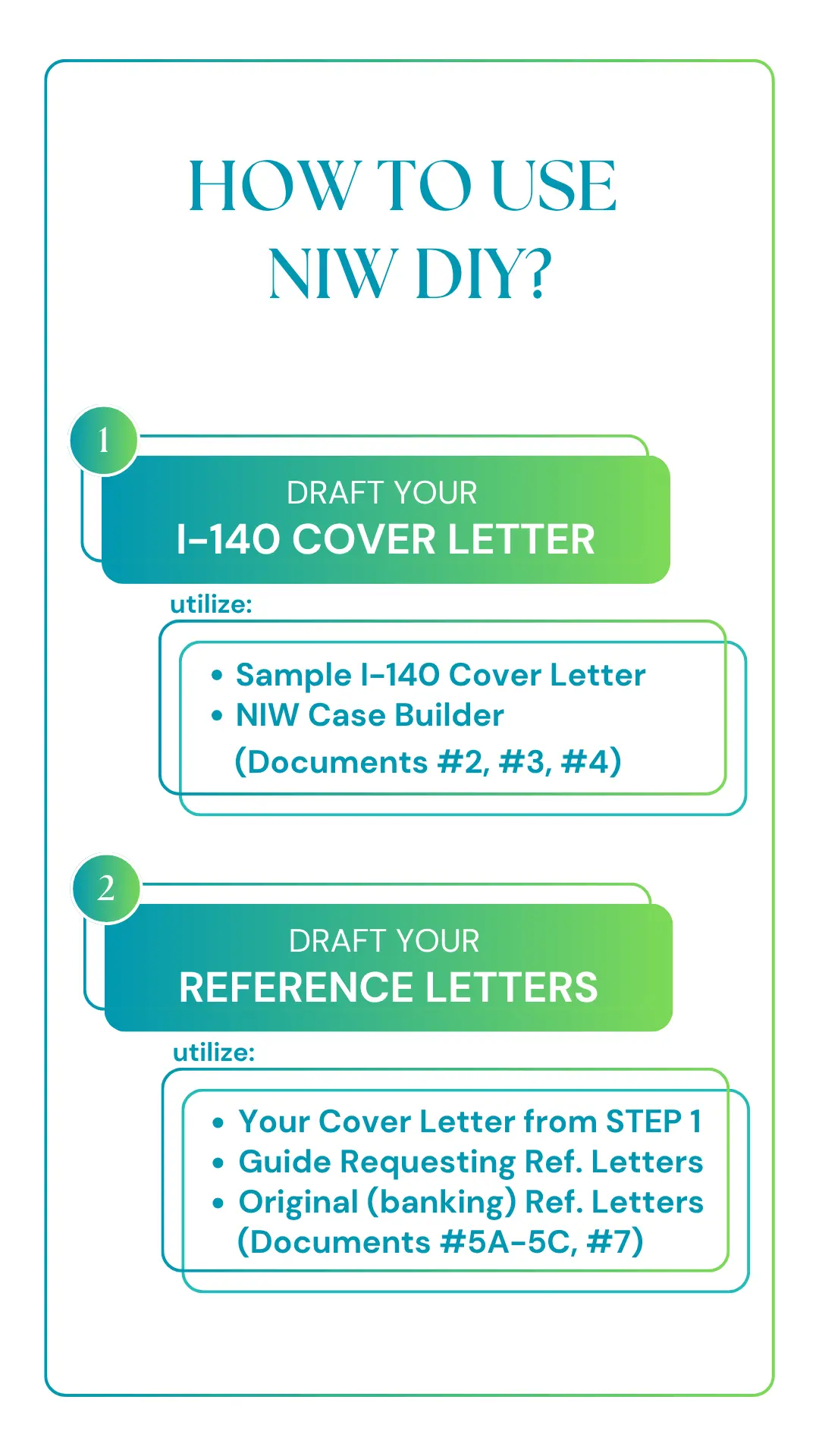
NIW DIY
List of Documents
- NIW DIY Instructions
- Sample I-140 Cover Letter
- NIW Case Builder
- Second NIW Case Builder (Optional)
- Our Original Anonymized I-140 Cover Letter
- Our Three Original Anonymized Reference Letters
- Editable Original Reference Letters
- Guide and E-mail Samples to Request Reference Letters
- A Guide Explaining How to Understand the Visa Bulletin
- Continuation of the Endeavor Statement
- Exclusive Lifetime Access to
 Discord Community What to expect from Discord ->
Most suitable for
- Pilot
- Aeronautical Engineer
- Air Traffic Controller
- Aerospace Technician
- Flight Dispatcher
- Aircraft Maintenance Engineer
- Aviation Safety Inspector
- Aerospace Design Engineer
- Avionics Technician
- Flight Test Engineer:
- Airport Manager
- Aircraft Systems Engineer
- Aerospace Project Manager
- Aircraft Interior Designer
- Airport Planner
- Airline Operations Manager
- Cargo pilot
- Flight Simulator Technician
- Airport Security Manager
- Aircraft Sales Representative
- Aircraft Leasing Manager
- Satellite Systems Engineer
- Aerospace Quality Engineer
- Aircraft Manufacturing Engineer
- Airline Training Instructor
- ... and other similar
Topics
- More Electric Aircraft (MEA)
- Aerospace products and systems
- Electrical power distribution
- Circuit breakers
- Motion control
- Aircraft engines
- Sensing and propulsion solutions
- Smart energy management
- Aviation environmental sustainability
- Reducing carbon emissions
- Aviation energy efficiency
- U.S. aviation technology innovation
- U.S. energy independence
- Aviation system reliability
- Fault tolerance in aircraft systems
- Advanced power electronics
- Efficient aircraft power distribution
- U.S. aviation market leadership
- Cargo
- Aviation logistics
- Hazardous goods transportation
- Strategic goods transport
- National defense logistics
- Healthcare supply chain
- Manufacturing logistics
- Agriculture cargo transport
- Safety regulations
- Hazardous materials handling
- Cold chain management

